The real question isn’t whether you need automation, it’s how long you can afford to wait.
CabraMove AMR Product Line
Autonomous Mobile Robots for real-world material movement
Material movement shouldn’t depend on forklifts running nonstop and people spending half the shift walking carts across the building. CabraMove AMRs help automate repeatable internal transport—towing, pallet movement, line feeding, and point-to-point delivery—so teams can reduce delays, improve safety, and keep production moving.
What is an AMR?
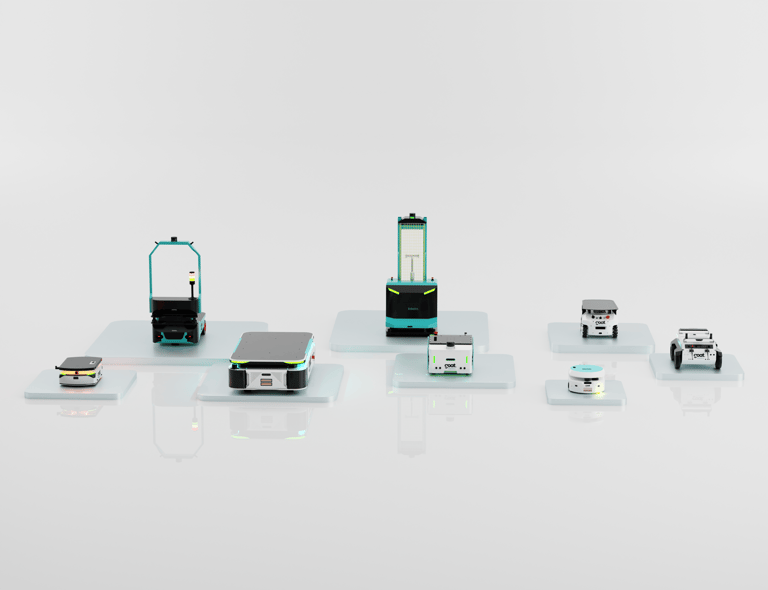
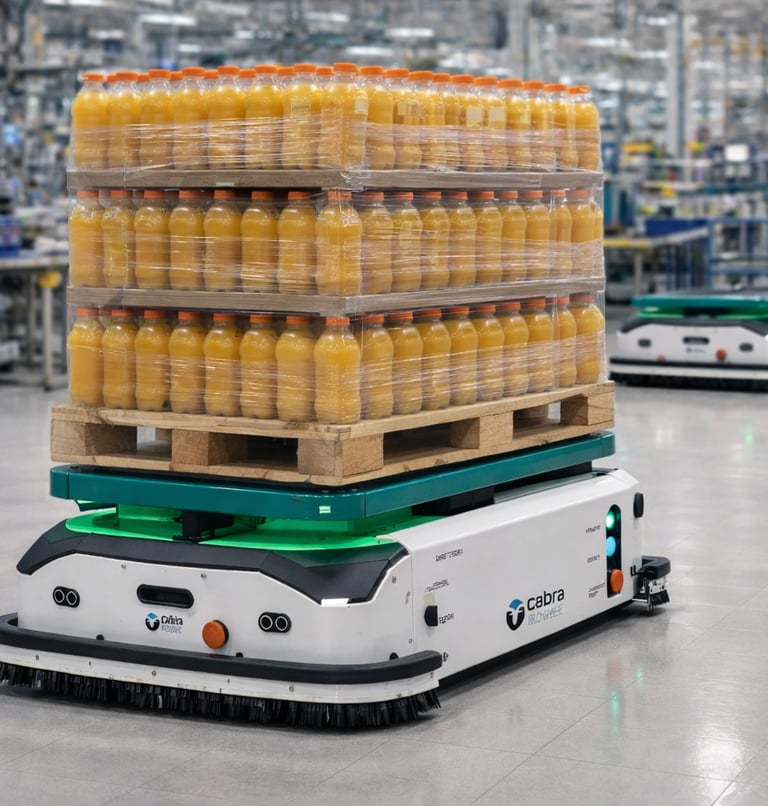
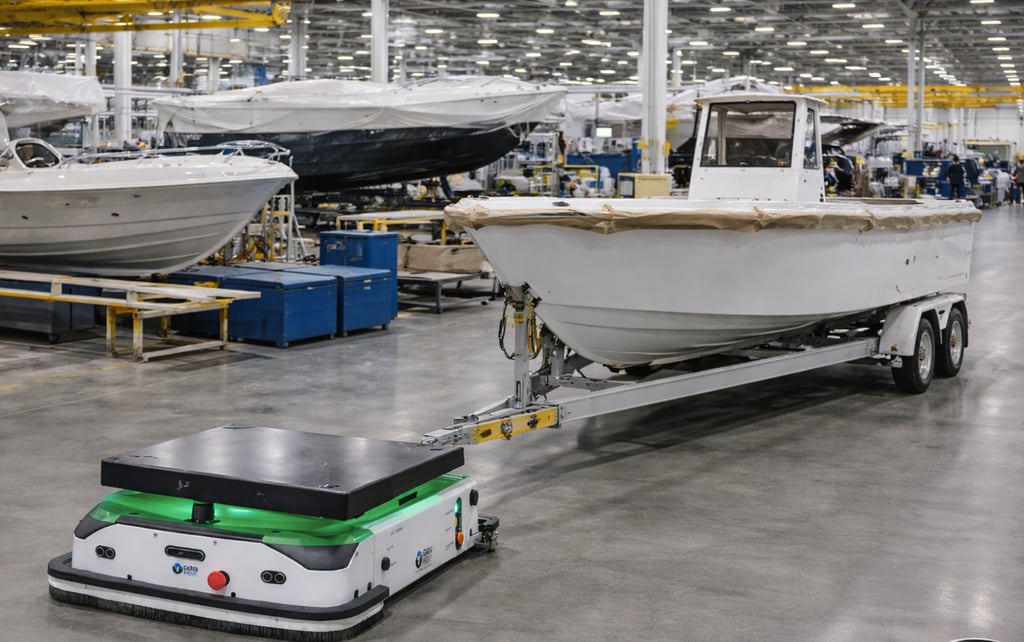
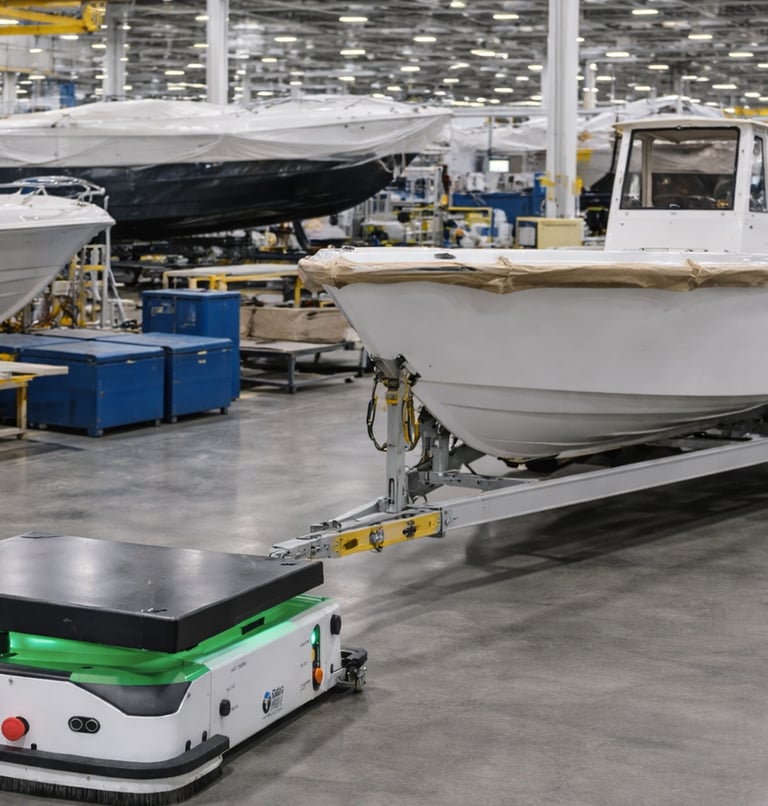
An autonomous mobile robot (AMR) is a robot that navigates through a facility using onboard sensors and software—so it can move materials without requiring tape, magnets, or fixed tracks. AMRs are typically deployed on repeatable routes (like milk runs, staging moves, or line feeding) and can scale from one robot to a coordinated fleet.
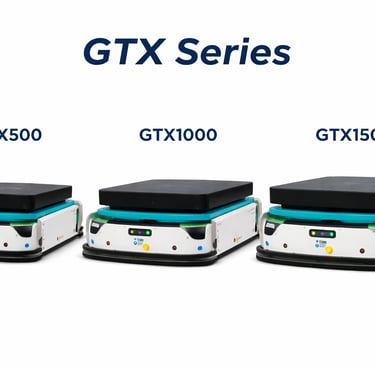
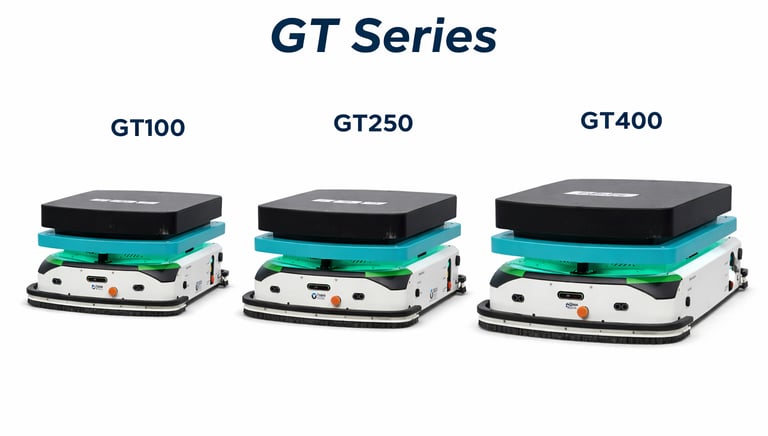
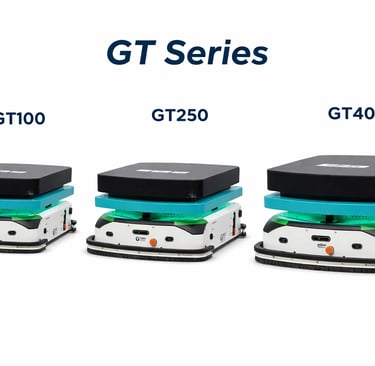
GT Series (100 / 250 / 400) compact platform AMRs
100–400kg payload, 845×625×300mm, 950mm aisle, ±5cm, ~8hr
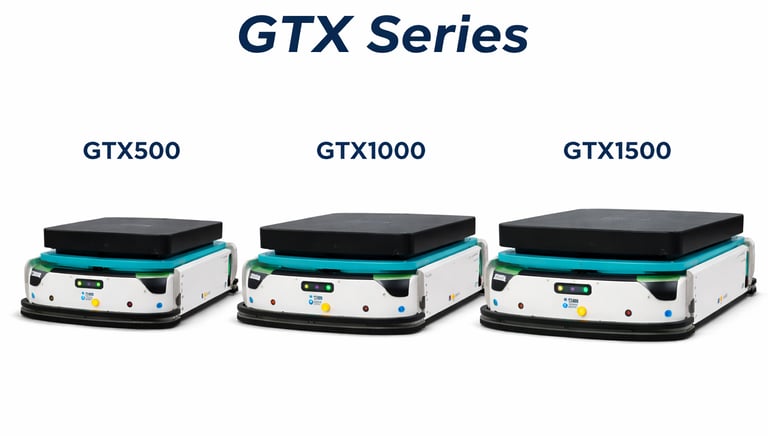
GTX Series (500 / 1000 / 1500) — heavy payload platform AMRs
500–1500kg payload, 1240×750×329mm, 1100mm aisle, ±5cm, ~8hr
Best when you need a smaller footprint robot for light-to-mid payload movement and modular top modules. Great for:
totes, trays, parts, bins
kitting deliveries
point-to-point internal logistics
modular add-ons (shelves, conveyors, etc.)
Where it shines: quick pilots, tight aisles, structured internal deliveries.
Best when loads get heavier (carts, racks, fixtures, heavier pallets on top modules) and stability matters.
Great for:
large carts / racks / fixtures
heavy work-in-process movement
high-repeat, high-weight routes
Where it shines: “industrial reality” moves where small robots don’t cut it.
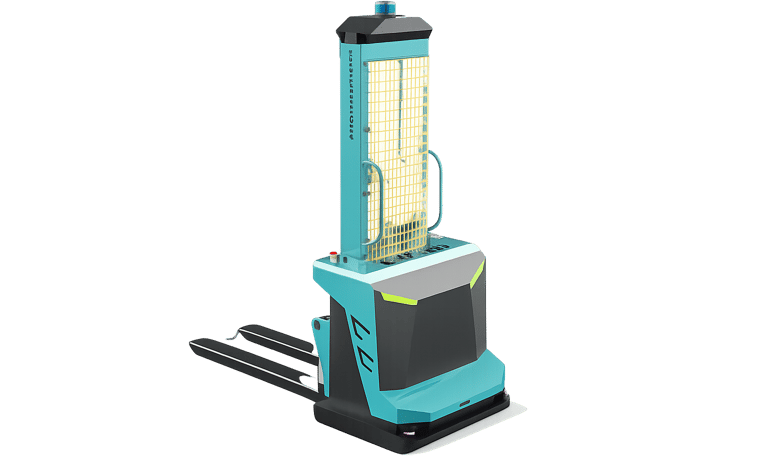
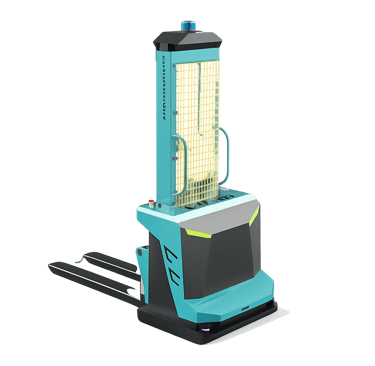
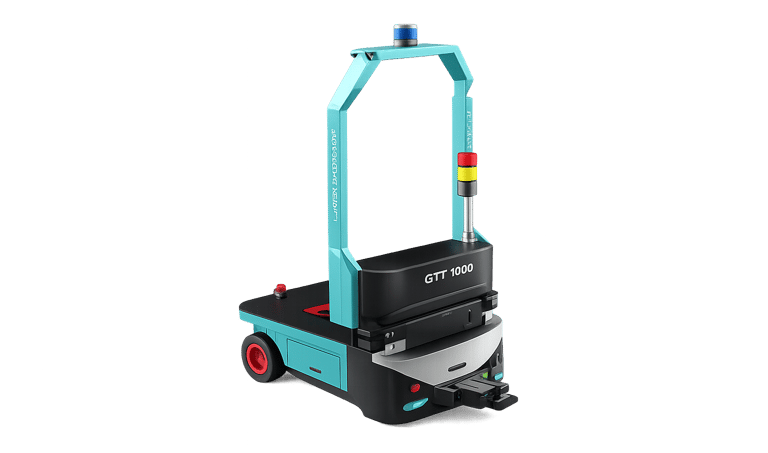
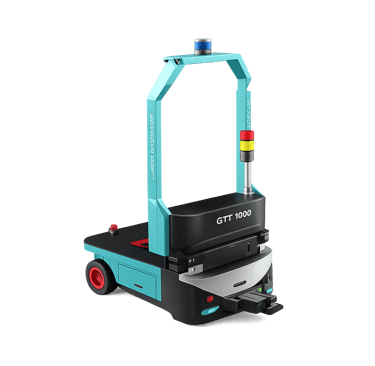
XT 1000 — Tugger AMR
1275×800×1900mm, 1200mm aisle, ±5cm, ~8hr, payload 1000kg, speed 1.5m/s
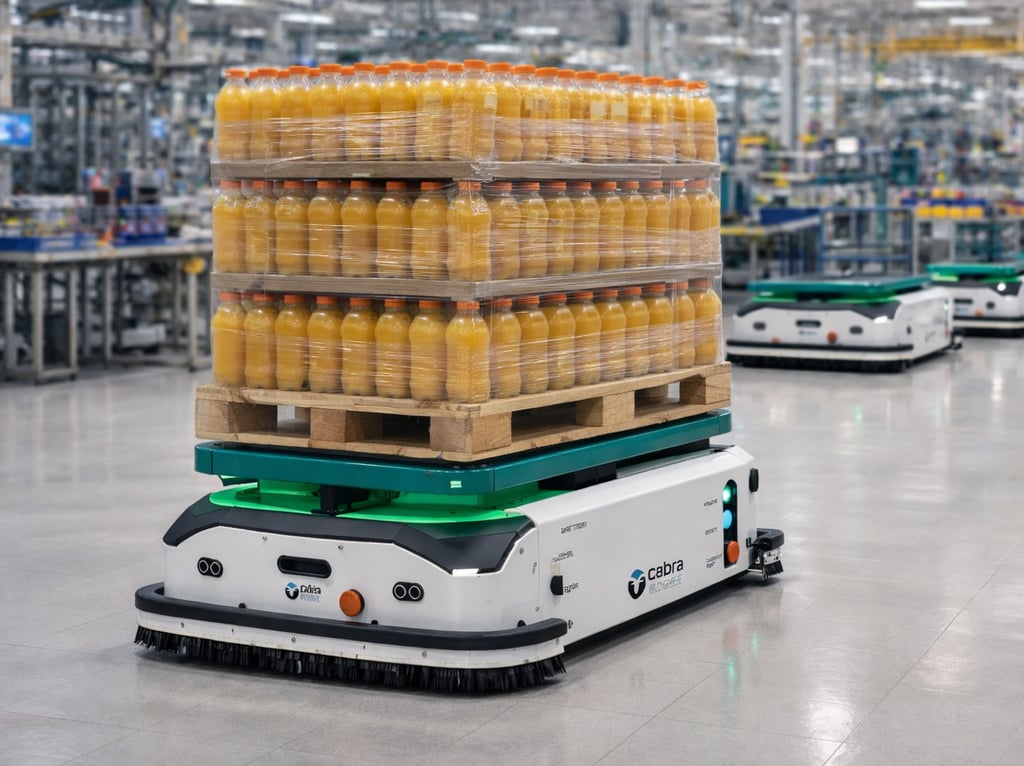
XP 1000 — Pallet movement AMR
Best for pallet transport workflows in manufacturing and warehouse operations, especially where repeatability and consistency matter more than “hero forklift driving.”
Great for:
receiving to storage
storage to staging
production feeding
finished goods to shipping
Best for towing workflows where you want consistent cart trains or trailer movement without relying on a forklift for every tug.
Great for:
milk runs
cart trains
returnable packaging loops
repetitive tug routes between departments
1940×880×2170mm, 1300mm aisle, ±5cm, ~6hr, payload 1000kg, speed 1.0m/s
HOW IT WORKS
How CabraMove Deployments Work
Discovery & Workflow Mapping
We identify the highest-impact material moves and define success metrics.
Site Readiness & Route Planning
We validate aisle widths, traffic flow, pickup/drop zones, and safety requirements.
We launch a pilot route that proves feasibility and ROI.
Pilot Deployment
Scale to a Fleet
Once value is proven, we expand routes, robots, and integration.


Do these AMRs require tape or magnets?
These platforms are designed for SLAM + visual navigation, which typically does not require tape or magnets for routing.
What aisle width do I need?
It depends on the form factor and turning needs. Minimum aisle widths listed in the specs range from 950 mm (GT series) up to 1300 mm (XP 1000).
What kind of floors work best?
Most facilities work fine, but we validate transitions, slopes, thresholds, and traffic flow during consultation. (A quick walkthrough often reveals the real constraints.)
How fast do they move?
Max speeds depend on model and configuration. The GT/GTX brochures list up to about ~1.2 m/s, XT 1000 is listed at 1.5 m/s, and XP 1000 at 1.0 m/s.
How accurate are they at docking?
The brochures list positioning accuracy at ±5 cm across these models.
How long do batteries last?
GT/GTX/XT models list around ~8 hours runtime with ~4 hours charging (varies by model), while XP 1000 lists ~6 hours runtime and ~3 hours charging.
Can these AMRs run around people and forklifts?
Yes—these platforms include safety and obstacle avoidance elements (e.g., laser scanner/depth camera/ultrasonic noted on XT/XP brochures). Your traffic plan and safety zones still matter.
What’s the best first AMR project?
Most teams start with a repeatable move: towing routes, replenishment runs, pallet staging, or line feeding—because they’re measurable and easy to validate.
Can you help justify ROI?
Yes. In the consultation we focus on the real drivers: walking time, forklift travel reduction, labor strain, throughput impact, and consistency.
FAQs
Quick links
Contact
STAY CONNECTED
contact@cabramove.com
313 -558- 7507
© 2024. All rights reserved.
Home