The real question isn’t whether you need automation, it’s how long you can afford to wait.
AMR Solutions for Manufacturing, Warehousing, and Material Flow
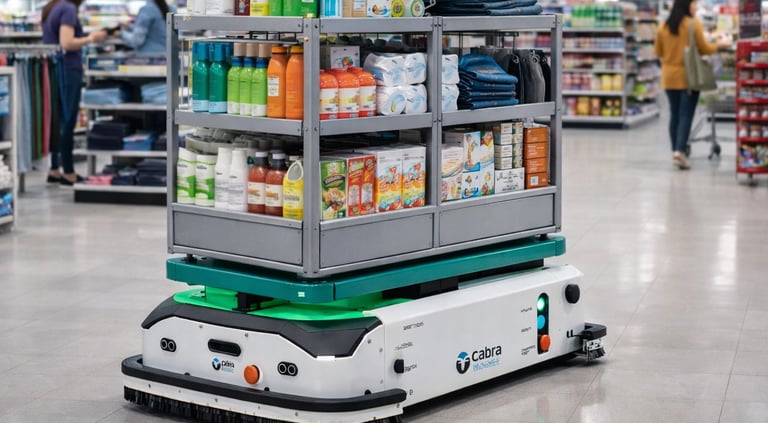
CabraMove provides autonomous mobile robot (AMR) solutions designed to improve internal material movement in real industrial environments. Our AMRs support towing, cart transport, pallet movement, line feeding, and heavy payload workflows—reducing delays, improving safety, and freeing up labor for higher-value work.
Each AMR deployment is designed around real facility constraints such as aisle width, floor conditions, traffic patterns, and integration requirements. CabraMove supports everything from a single AMR pilot to scalable fleet deployments.
HOW TO CHOOSE
How to Choose the Right AMR Solution
If you’re not sure where to start, here’s the simplest way to think about it:
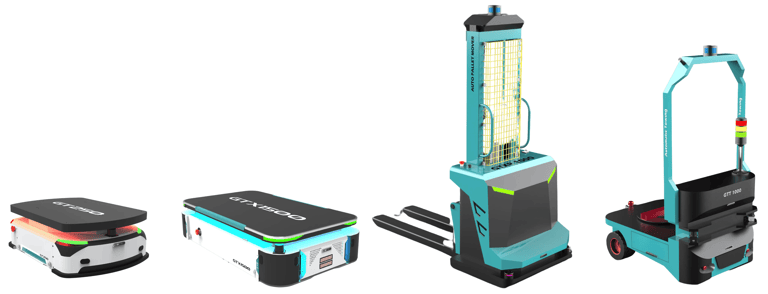
If you move carts or trailers → start with an AMR tugger
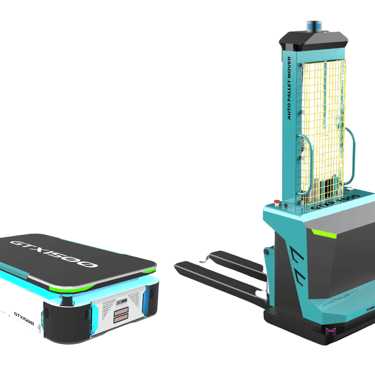
If you move pallets → start with an autonomous forklift AMR
If you move totes, trays, or line feeding materials → start with a conveyor AMR
If you move large carts, racks, or heavy fixtures → start with a heavy payload AMR
If you plan to run multiple robots across multiple routes → you need fleet management + integration
AMR Tugger Robots (Cart & Trailer Towing)
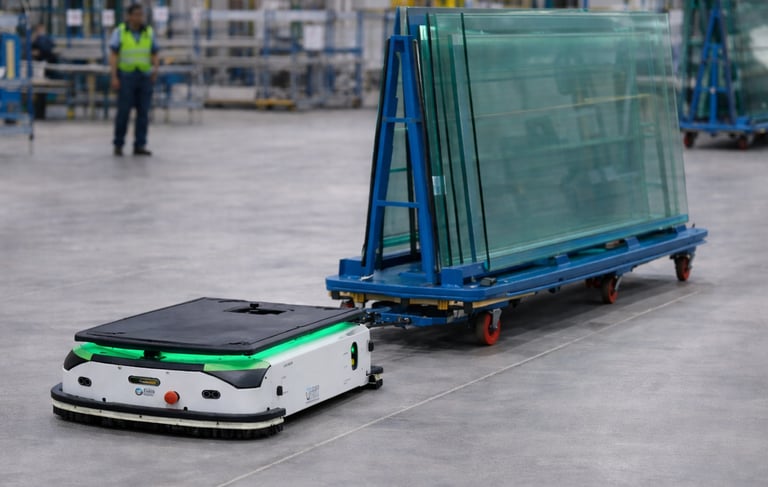
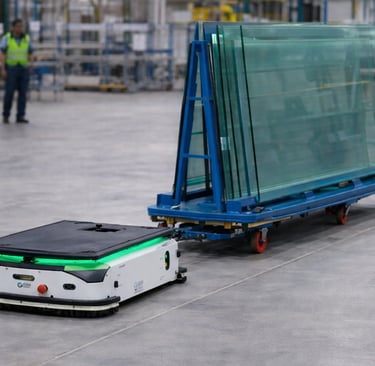
CabraMove tugger AMRs automate repeatable cart towing routes in manufacturing and warehouse environments. This is often the fastest ROI AMR deployment because the workflow is structured and predictable.
Common use cases
Cart towing between storage and production
Milk-run routes between workcells
Returnable packaging loops
Key benefits
Less walking and cart pushing
Reduced forklift traffic for non-pallet moves
More consistent line feeding
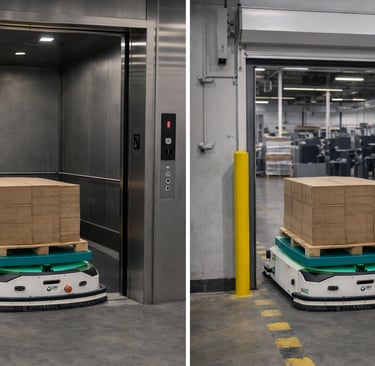
CabraMove forklift AMRs support pallet movement between receiving, storage, staging, and shipping zones. These systems reduce forklift congestion and improve safety while increasing consistency.
Common use cases
Pallet transfer from receiving to storage
Finished pallet movement to shipping
Staging and replenishment
Key benefits
Reduced forklift travel
Predictable movement and less congestion
Supports multi-shift operations
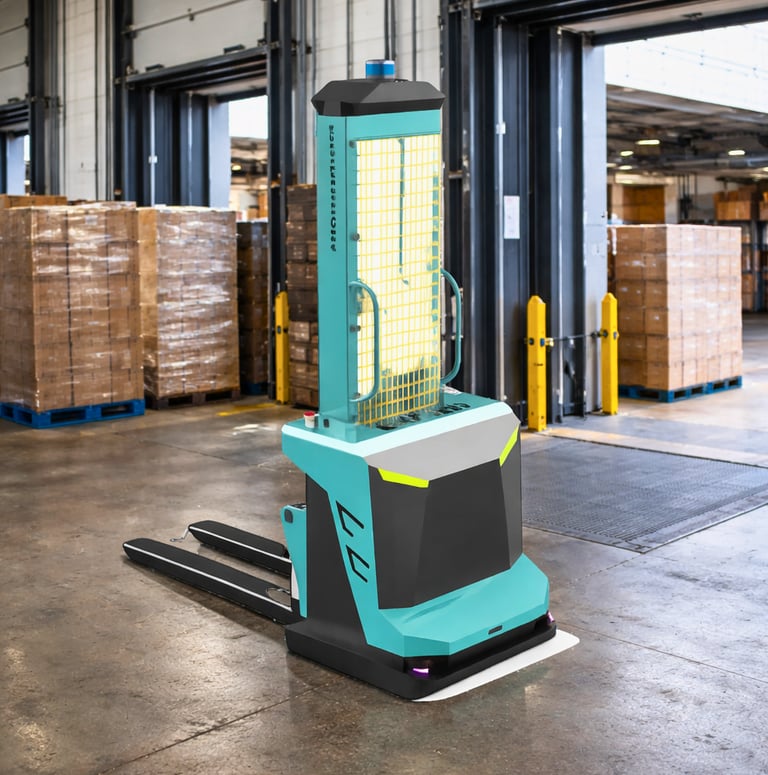
Autonomous Forklift AMRs (Pallet Movement)
CabraMove conveyor AMRs support line feeding, tote delivery, and transfer workflows without requiring fixed conveyor infrastructure across the entire facility.
Common use cases
Tote delivery to assembly stations
Packaging material delivery
Transfer between workcells
Key benefits
Reduces walking and replenishment delays
Improves station uptime
Scales easily as demand grows
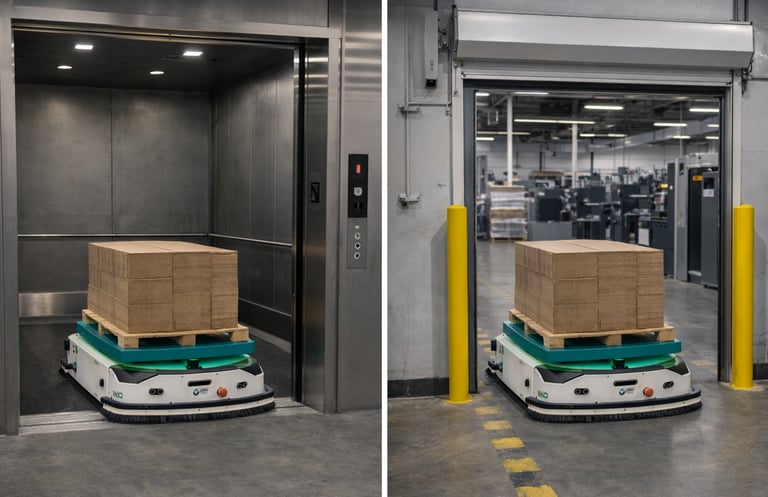
Conveyor AMRs (Line Feeding & Transfer)
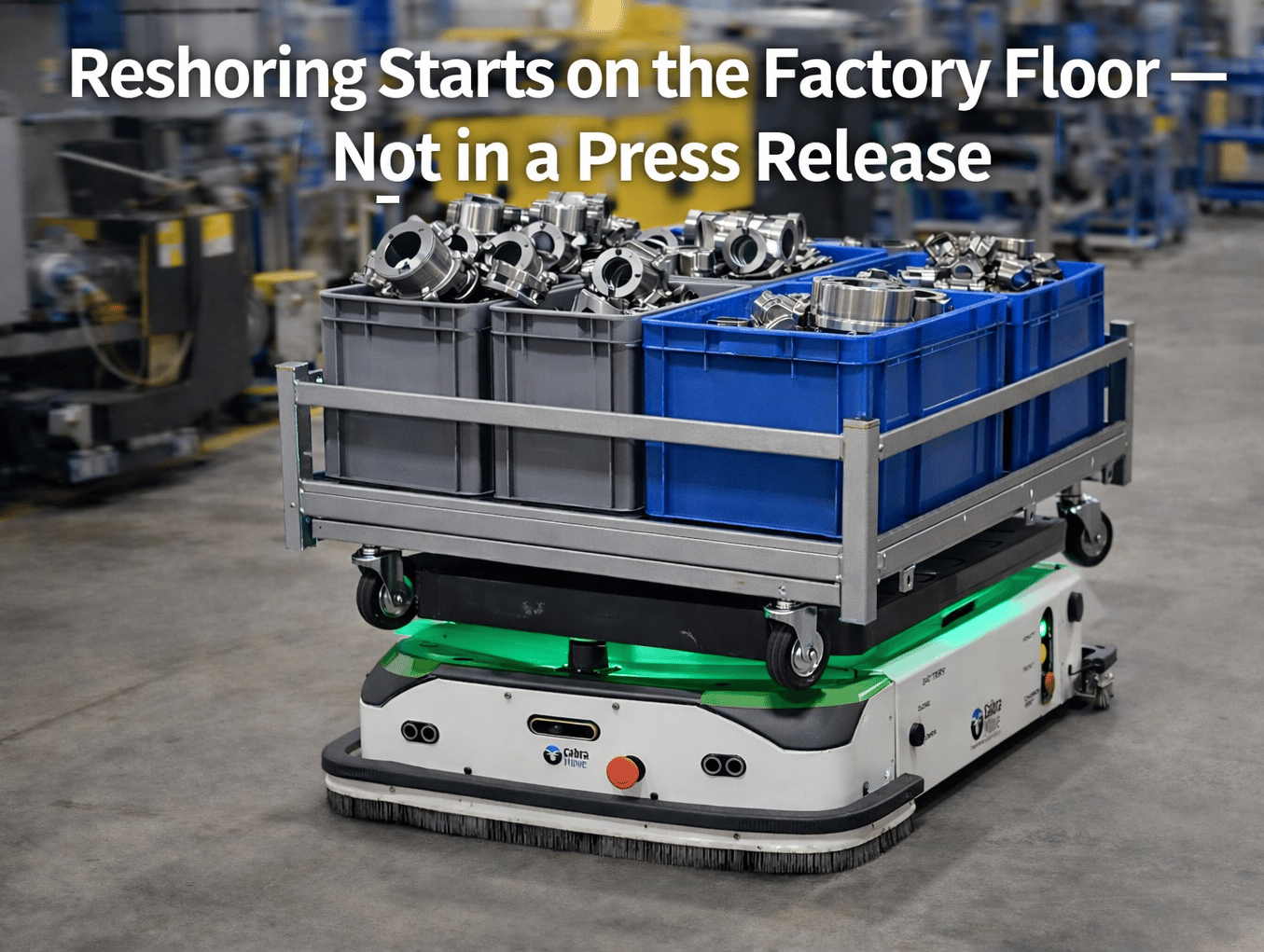
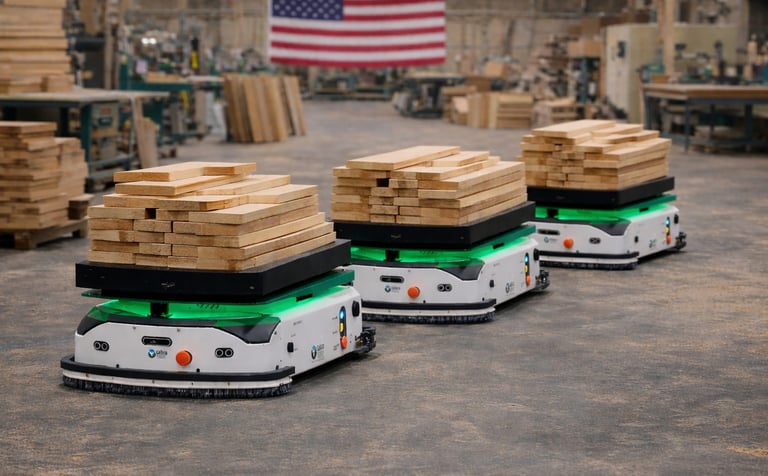
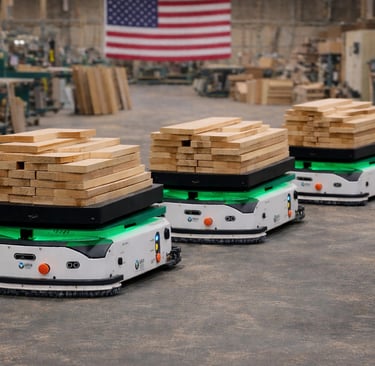
CabraMove supports heavy payload AMRs designed for industrial loads such as racks, fixtures, large carts, and heavy pallets. These systems are built for stability, safety, and real factory conditions.
Common use cases
Rack and fixture movement
Heavy cart transport
High-value load movement
Key benefits
Reduces forklift congestion
Improves safety and load protection
Enables repeatable internal logistics
Heavy Payload AMRs
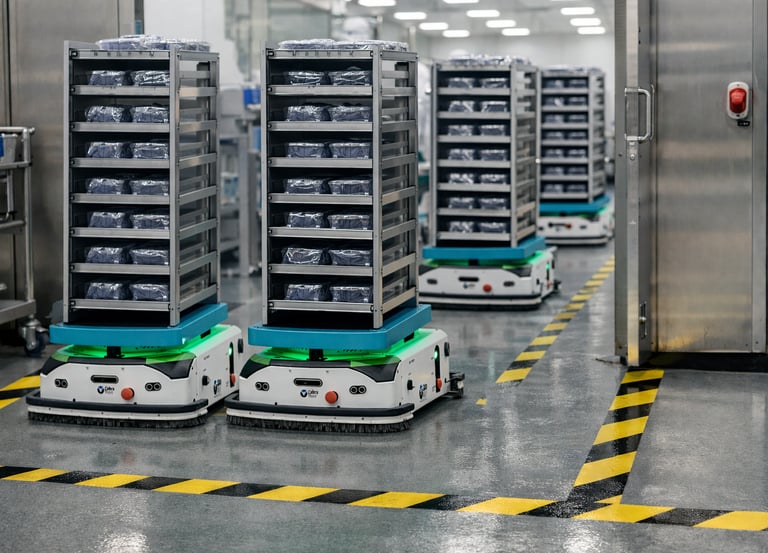
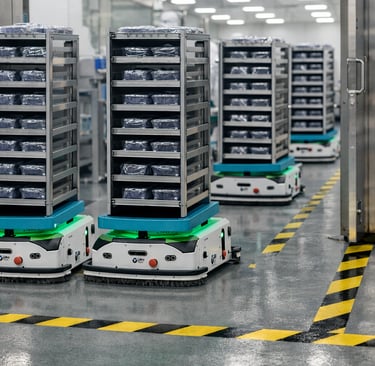
CabraMove deployments can be supported by fleet management tools that coordinate multiple robots, routes, and priorities. This becomes especially important when scaling beyond a single pilot.
What it supports
Dispatching and job scheduling
Routing and traffic control
Multi-robot coordination
Integration options for WMS/ERP and facility workflows
Fleet Management + Integration
Every facility is different. A successful AMR deployment starts with validating the basics:
Aisle width and turning clearance
Floor conditions and transitions
Pickup and drop zone definition
Load weight and stability
Route distance and traffic patterns
Safety expectations and pedestrian zones
Integration needs (optional)
AMR Site Requirements (What We Validate)
AMR hardware (right form factor)
Site walkthrough + workflow mapping
Route setup + safety validation
Fleet scaling plan
Integration with doors / elevators / WMS
Support + training + uptime plan
ROI reporting via GT-Studio
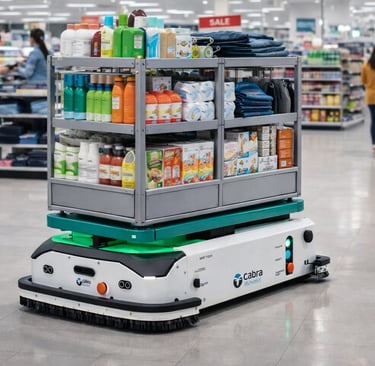
What CabraMove Delivers
Frequently Asked Questions
How long does it take to deploy an AMR?
A pilot can often be deployed in weeks depending on site readiness, route complexity, and integration requirements.
What’s the best AMR use case to start with?
Most teams start with towing routes, line feeding, or pallet staging—high repetition, clear routes, and measurable ROI.
Do AMRs work around people and forklifts?
Yes. AMRs are designed for mixed-traffic environments using safety sensors and obstacle avoidance.
Do AMRs require tape or magnets?
No. CabraMove AMRs use SLAM + vision navigation and can operate without fixed infrastructure.
Can CabraMove integrate with WMS/ERP systems?
Yes. Integration depends on your workflow and what triggers movement today.
FAQs
Quick links
Contact
STAY CONNECTED
contact@cabramove.com
313 -558- 7507
© 2024. All rights reserved.
Home